Permanent LED lighting: what is actually up there
If you want to know what you are bolting to your house for the next decade, this is the page. The components, the specs that matter in New Mexico, and the ones that are marketing.
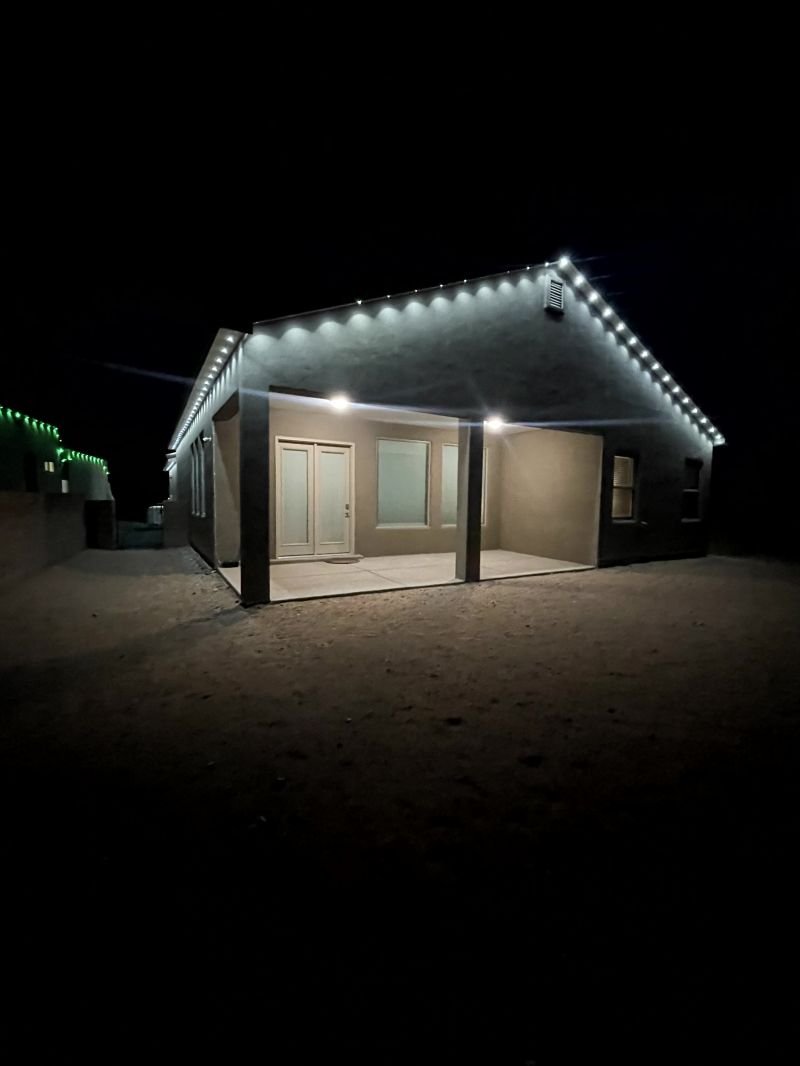
Addressable is the word that matters
There are two kinds of system sold as “permanent lighting”, and the price difference between them is not always obvious on a quote.
In a non-addressable system, the whole run is one color at a time. You can have red, or you can have green, and that is the end of the conversation. In an addressable system, every point on the run is controlled independently. That is what lets one roofline alternate red and green, run a slow chase, put the Balloon Fiesta colors in sequence, or light one gable differently from the rest of the house.
Almost everything people actually want from this product needs addressable points. It is also the first thing cut to make a quote look competitive, and it is rarely volunteered. Ask. More on comparing quotes properly.
RGB plus a real white
Color comes from mixing red, green and blue. A system that only has those three has to fake white by running all of them at once, and the result is a slightly cold, slightly off white that never quite looks like a warm bulb.
Because the setting you will run three hundred nights a year is warm white, a dedicated white channel is the spec that most affects how much you like the system in ordinary use, and it is the one nobody thinks to ask about because they are busy imagining Christmas.
The channel is not just a bracket
The track that holds the points is doing more work than it appears to. It aims the light downward, so you get a wash on your wall rather than points glaring into the street or into a bedroom window across the road. It keeps the line mechanically straight for years, which a cable clipped to fascia does not. And in daylight it is the reason this reads as trim rather than as equipment. The day/night comparison on the outdoor lighting page shows exactly what that means from the street.
It gets color-matched to your fascia, which on Albuquerque houses usually means one of a handful of browns, tans, whites or dark bronzes. We check that against the actual paint at the estimate rather than guessing from a photo.
What five thousand feet does to plastic
This is the part of the spec conversation that is genuinely local. Albuquerque sits above five thousand feet with well over three hundred days of sun a year, and UV intensity climbs noticeably with altitude. It is why patio furniture here fails faster than it does at sea level, why cheap light clips go chalky and snap, and why a strand that lasted five years somewhere humid and cloudy lasts two here.
Then there is the monsoon: sideways rain into every roof edge from July through September, and hail hard enough to take out a roof in a bad year. Anything permanently mounted on an Albuquerque fascia has to be specified for continuous outdoor exposure, not for a season. That is the actual argument for buying the fixture rather than the strand.
What we will not claim on this page
We are not going to print a brand name or an IP rating here for the sake of looking technical, because the specific product we fit is confirmed on your estimate and we would rather it be right on your paperwork than approximately right on a marketing page. What we will state plainly is the part that actually protects you: the system carries a 15-year warranty. Ask us at the measure and we will hand you the actual spec sheet. If any installer will not do that, that is your answer.
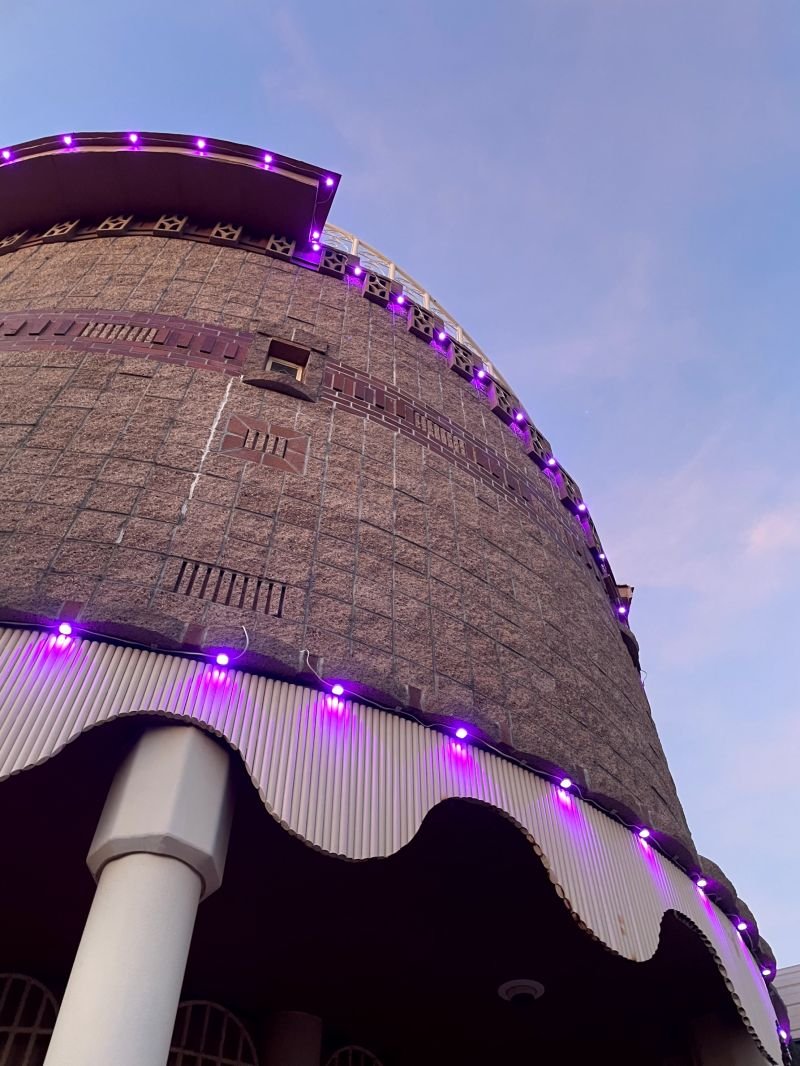
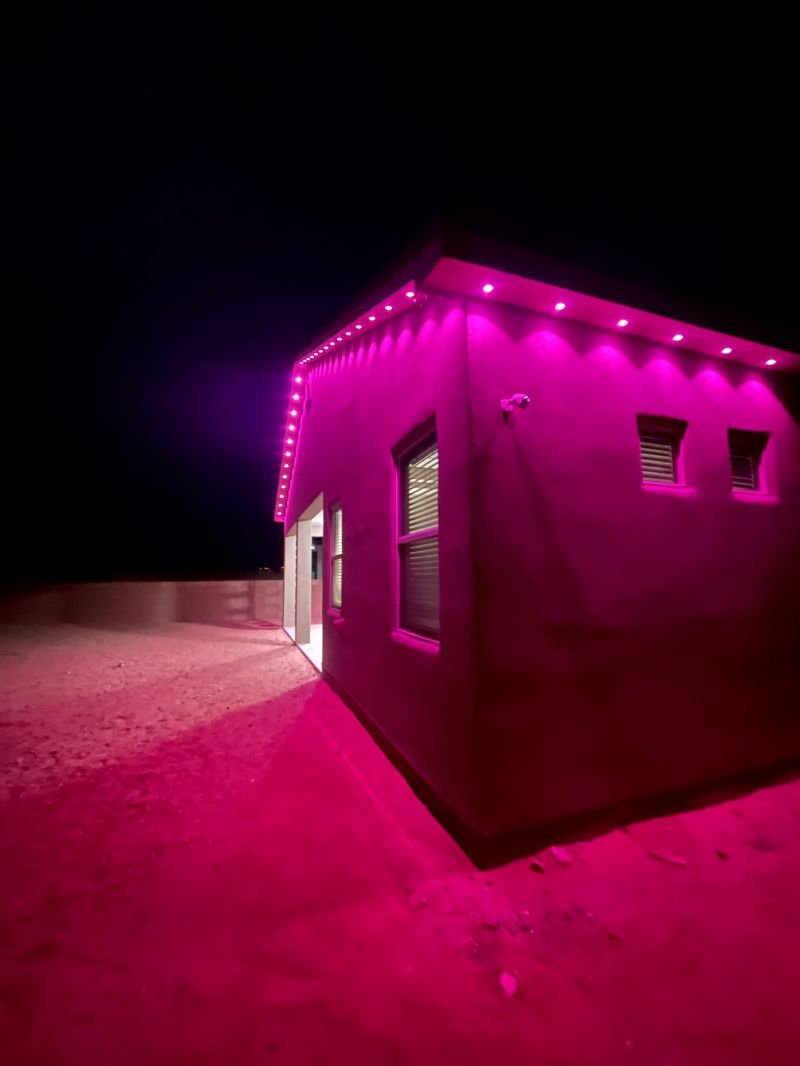
Specs that matter, specs that do not
A quick filter for the sales conversation, whoever you are having it with.
| Spec | Why it is quoted | Does it matter here? |
|---|---|---|
| Individually addressable points | Enables multi-color, chases, per-section control | Yes, the most important line on the quote |
| Dedicated white channel | Gives a true warm white rather than mixed white | Yes, it is the setting you run all year |
| Mechanical fixing of the channel | Holds the track through heat cycling and monsoon | Yes, adhesive-only does not belong here |
| Weather rating of the fixtures | Continuous outdoor exposure rather than seasonal | Yes, get the actual rating in writing |
| Point spacing | Determines whether it reads as a line or as dots | Yes, but judge it by eye, not by number |
| “Millions of colors” | Sounds impressive in a brochure | Not really, every RGB system says it |
| Number of built-in preset effects | Big number on a box | No, you will use four of them, ever |
Hardware questions
How long do the LEDs last?
LED modules of this type are rated in the tens of thousands of hours, which at a few hours a night is a very long time. The honest caveat is that a system is not only its LEDs. Controllers, connectors and power supplies are what fail first in any outdoor electronics, anywhere. That is exactly why the warranty matters more than the headline hour count, and ours runs 15 years. The full terms are written on your estimate.
What colors can it do?
Full RGB color mixing, so effectively any color, plus a dedicated white. That white channel matters more than people expect: mixing red, green and blue to fake white gives you a slightly off, faintly blue result, which is exactly the wrong look for the warm architectural setting you will run most nights.
Can it be dimmed?
Yes, per scene. This is worth more than it sounds. Full brightness is right for December; for everyday warm white most people end up somewhere well below it, which looks better, is kinder to the neighbors and is what makes it read as architectural lighting rather than decoration.
Do the points get hot?
They run warm, not hot, and they are seated in a channel that acts as a heat sink. Nothing about the assembly is a fire concern on a fascia board, which is a fair thing to ask about anything permanently attached to your roof.
What is the spacing between the points?
Fixed by the channel, and chosen so that the wash reads as a continuous line of light rather than separate dots at normal viewing distance from the street. Closer spacing means more points and a higher price; wider spacing gets cheap-looking fast. We will walk you through the actual spacing at the estimate so you are judging the real thing rather than a number on a page.
See the actual hardware, on your actual house
Ask us anything about the spec at the measure. We would rather answer six skeptical questions than get a signature from someone who is not sure.
- Backed by a 15-year warranty.
- Albuquerque metro only. We are not a franchise routing you to a subcontractor.
- Every estimate is measured on site, in person, before you get a number.
Start your quote
Two dropdowns and your name. Everything else is optional.