Commercial permanent lighting
Your building lit every night of the year, seasonal color on the dates you choose, and no line item in the November budget for a crew to hang lights and another one in January to take them down.
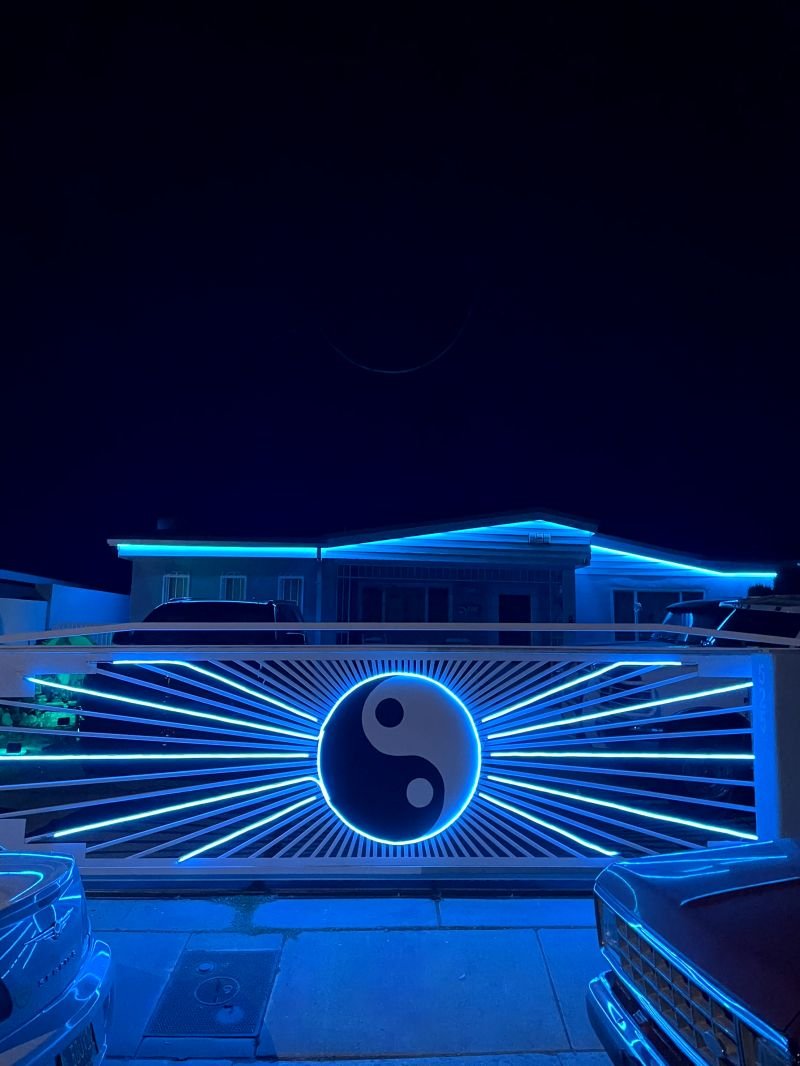
The business case is simpler than the residential one
For a homeowner, permanent lighting is partly a lifestyle purchase. For a business it is mostly arithmetic.
If you currently pay a contractor to install holiday lighting each autumn and remove it each winter, that is a recurring annual cost with no asset at the end of it, and it goes up every year. Permanent lighting converts that into a one-off capital cost, and then gives you three hundred and sixty-five nights of lit frontage instead of forty.
That last part is the bit that gets undersold. A lit building at seven on a February evening is visible, looks open and looks maintained. An unlit one disappears into the block.
What we install this on
- Retail frontages and strip centers. Parapet runs above the storefront line, which is the highest-visibility foot of lighting in the whole trade.
- Restaurants and bars. Frontage and patio edges, usually warm white nightly with color reserved for events.
- Offices and professional buildings. A restrained architectural wash that makes the building read as looked-after after dark.
- Auto dealerships and showrooms. Long clean parapet runs, and buildings where being visible at night is the entire point.
- Churches, schools and community buildings. Seasonal color without asking volunteers to get on ladders, which is a real liability question.
- Hotels and event venues. Scenes for events, weddings and holidays without hiring a lighting crew each time.
If you manage residential communities rather than a commercial building, the HOA and property management page is the right one.
The liability angle, since nobody else mentions it
A meaningful number of businesses currently get holiday lighting up by sending a staff member or a volunteer up a ladder. That is a workers’ comp claim waiting for a windy November afternoon, and everyone involved knows it.
A permanently installed system means the ladder work happens once, done by people whose actual job it is, and never again. For a school, a church or a small business without a maintenance team, that is often the argument that actually closes the decision.
What you get on the estimate
An itemized number: which elevations, how many linear feet, the controller position, the power requirement and what happens if a section fails in year three. If you need it in a format that will survive a board meeting or a landlord approval, say so and we will write it that way. What moves the number works the same way as it does residentially, with scale and access mattering more.
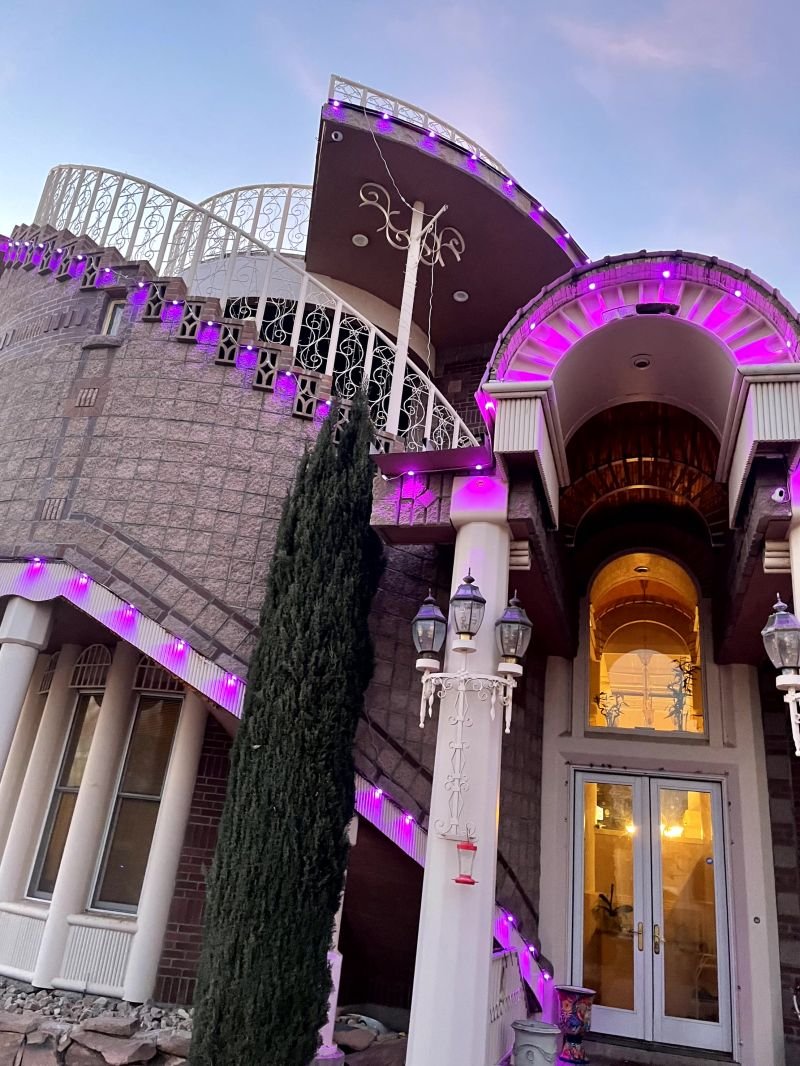
Multiple sites?
Tell us up front on the form. Quoting three locations together usually beats quoting them one at a time, and it keeps the look consistent across all of them. Where we cover.
Seasonal contractor versus installed system
The honest comparison for a business that already budgets for holiday lighting every year.
| Seasonal contractor | Permanent system | |
|---|---|---|
| Cost shape | Recurring, every year, rising | One capital cost, then effectively nothing |
| Nights lit per year | Roughly forty | Every night you schedule it |
| Scheduling risk | You are competing for November slots | None, it is already installed |
| Ladder liability | Twice a year, every year | Once, by us |
| Brand colors | Whatever the contractor stocks | Set once, then any night you want |
| Disruption to trading | Two visits a year in your busiest season | One install, scheduled around your hours |
Commercial questions
Can you work outside business hours?
Usually, and for a lot of businesses that is the only workable answer. Retail frontages and restaurants generally get done early morning or after close. Tell us your constraint on the quote form and we will build the schedule around it rather than around us.
We lease the building. Is that a problem?
Not usually, but you will need the landlord’s sign-off because it is a permanent fixture on their building. We can provide the spec and photos for that conversation. It is also worth agreeing up front, in writing, who owns the system if you move out.
Can it show our brand colors?
Yes. Full RGB with a dedicated white, so brand colors are achievable within the physics of colored light on a colored wall. A specific corporate blue lands differently on tan stucco than it does on a white parapet. We will show you it on your actual building before you commit.
Who manages it day to day?
Whoever you want. Most businesses set a schedule once (brand white nightly, seasonal color on set dates) and then nobody touches it for months. We hand it over set up, not as a project for someone on your staff.
Do you do multiple locations?
Yes, and if you have several sites in the metro tell us at the start. Sequencing them sensibly usually gets you a better number and a consistent look across all of them, rather than three separately quoted one-offs.
Get a commercial estimate
Tell us about the building and we will come and measure it. If you need the numbers in a form your landlord or your board will accept, say so and we will write it that way.
- Backed by a 15-year warranty.
- Albuquerque metro only. We are not a franchise routing you to a subcontractor.
- Every estimate is measured on site, in person, before you get a number.
Start your quote
Two dropdowns and your name. Everything else is optional.