How permanent lighting actually works
No sales language. This is the whole system, part by part, so that when you get quoted, by us or by anybody else, you know exactly what you are being sold and which questions are the sharp ones.
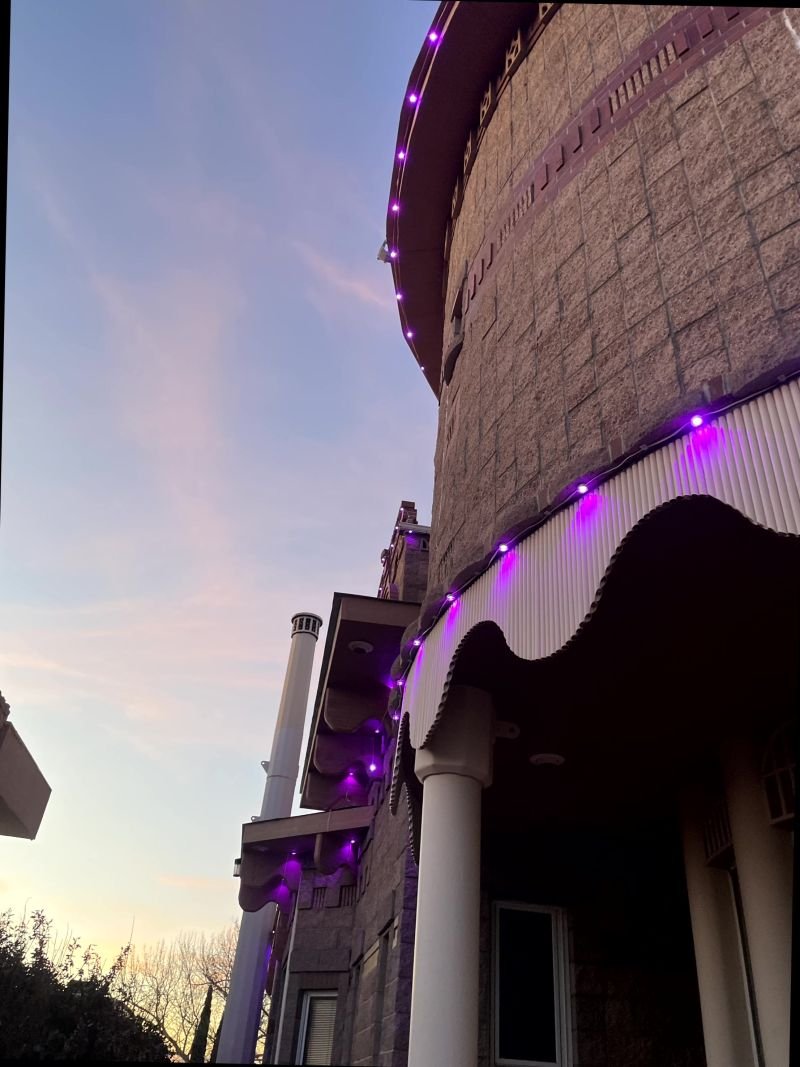
The four parts
Every permanent lighting system on the market, whoever sells it, is these four things. If a salesperson cannot walk you through all four, that tells you something.
-
The channel
A slim rigid track, fastened under your roof edge along the fascia or trim, color-matched to it. It does two jobs: it holds the light points in a dead-straight line that will not sag in five years, and it aims them. That aiming is the difference between a wash of light down your wall and a row of dots glaring into the street. It is also the reason this looks like trim in daylight. More on how it mounts to different Albuquerque roof types.
-
The light points
Small LED modules seated in the channel at a regular spacing. The critical word is addressable: each point is controlled independently, which is what lets one run do alternating red and green, or a slow chase, or a single warm color. Non-addressable systems can only be one color at a time across the whole run, and they are cheaper for a reason. Hardware detail here.
-
The controller and power supply
The brain and the transformer. Mains power in, low voltage out to the runs, and the logic that holds your scenes and schedules. It lives somewhere sheltered, usually the garage or a weather-rated box by an exterior outlet. Sizing this correctly for your total run length is the least glamorous and most important decision in the whole job, because an undersized supply is how you end up with color drift at the far end of a long run.
-
The app
Where you pick colors, build scenes, and set schedules such as on-at-dusk, off-at-eleven. Scenes save, so “our Christmas” is a button you press next year rather than a design job you redo. We set your first scenes up with you before we leave, on your phone, and we do not leave until you have driven it yourself.
What the install day is like
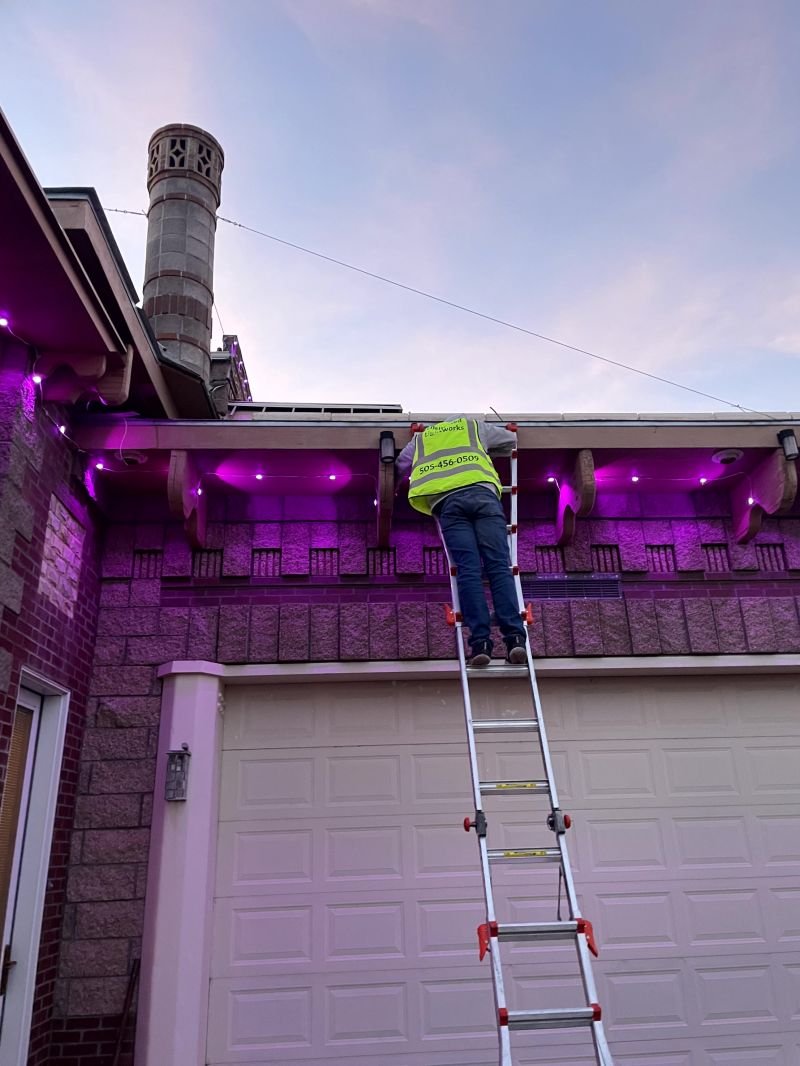
We arrive with the run lengths already measured from the estimate, so the day is fitting rather than figuring out. The channel goes up along the agreed lines, mechanically fastened into fascia and sealed. Low-voltage cable is routed back to the controller position, kept tight to the trim lines and out of sight wherever the building allows it.
On a tile roof, and this city has a lot of them, the work happens from ladders off the fascia. Nobody should be walking your concrete or clay tile, because it cracks and the cracks are not always obvious on the day. If a company is happy to stroll across your tile roof, that is worth noticing.
Then we power it up in daylight, check every point is alive, and come back at dusk or stay until it is dark enough to actually see what we have built. Aiming and brightness get set with your eyes on it, not ours alone.
The questions worth asking any installer
Including us. If you are getting more than one quote in Albuquerque, these are the ones that separate the quotes:
- Are the points individually addressable, or is the whole run one color? This is the single biggest spec difference and it is rarely volunteered.
- How is the channel fixed, and what happens to my fascia? Adhesive-only mounting does not belong on a south-facing New Mexico elevation.
- Where does the controller go and who chooses? If the answer is “we will work it out on the day”, expect a surprise.
- What is the actual warranty, on which parts, and who honors it? Get it written on the estimate. Manufacturer cover on the parts and labor cover from the installer are two different things. Ours is 15 years, and it is on the paperwork before you sign.
- Who comes out if one point fails in three years? If the company is a franchise routing to subcontractors, ask who exactly.
- Is the price for the front only, or everything you just walked round? Ambiguity here is where quotes stop being comparable. More on comparing quotes.
We would rather you asked us all six and picked someone else than had you buy from us without knowing what you were buying.
Still deciding whether you want it at all?
Start with what it looks like on a normal night on the permanent outdoor lighting page, or see the real installs in the gallery. If it is a December decision, the Christmas page is the one.
Technical questions, answered without hedging
Does it need Wi-Fi to work?
It needs a connection to set up and to change scenes remotely. Once a schedule is saved to the controller, the lights keep running that schedule whether or not your internet is up. A router reboot does not leave you in the dark. We will confirm the exact connectivity for the product we install on your estimate.
What happens in a power cut?
The lights go off, like everything else. When power returns the controller comes back and picks the schedule up again. You should not need to reprogram anything.
Where does the controller live?
Somewhere sheltered and reachable, commonly inside the garage, or in a weather-rated enclosure near an existing exterior outlet. Part of the on-site measure is agreeing that location with you, because it determines the wiring route and it is much easier to decide before the install than during it.
Do you have to drill into my house?
Yes. The track is mechanically fastened to the fascia or trim, because anything adhesive-only will not survive a New Mexico summer. It is a small number of fixings into fascia board, the same as a gutter, and we seal the penetrations. If a future owner ever wants it removed, it comes off and the fascia is patched and painted.
Can it be added to later?
Usually yes. If you light the front elevation this year and want the garage side or the back patio later, that is normally an extension of the same system rather than a second one. Tell us at the estimate if you think you might, and we will size the controller and the runs with that in mind.
How long does the install take?
Most single-story Albuquerque homes are a day. Two-story homes, tile roofs and long runs can push into a second day. We will tell you which yours is when we quote, not on the morning we turn up.
What is actually different from LED strip lights from a hardware store?
Three things: the fixtures are built for permanent outdoor exposure rather than under a kitchen cabinet, each point is individually addressable so you can run two colors on one run, and it is installed in a rigid channel that holds a straight line for years. The hardware page goes into this properly.
Ask us the hard version of any of this
We would rather answer six skeptical questions than get a signature from someone who is not sure. Send the form and we will come and look at the actual house.
- Backed by a 15-year warranty.
- Albuquerque metro only. We are not a franchise routing you to a subcontractor.
- Every estimate is measured on site, in person, before you get a number.
Start your quote
Two dropdowns and your name. Everything else is optional.